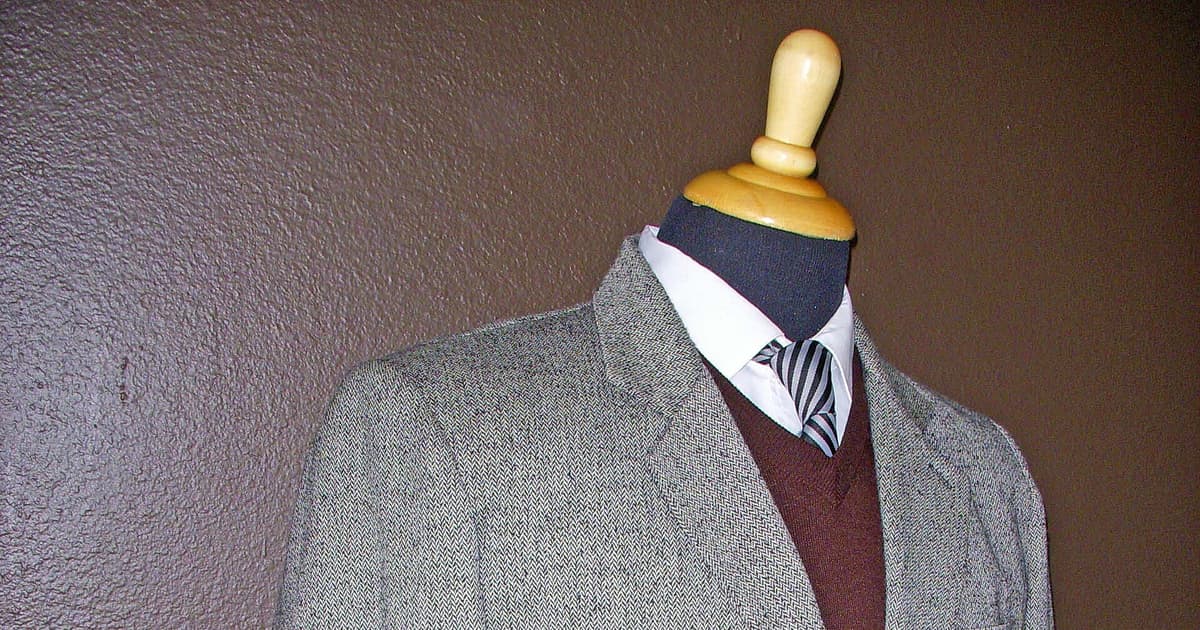

A used tweed jacket can be a very good thing to buy. The cloth is hard-wearing, the shape changes slowly, and someone else has already paid for the stiffness to wear off. Used tweed also has particular ways of going wrong, and most of them can be seen in five minutes if you know the order to look in.
1. Shoulders and fit
Start here because it can end the search at once. The shoulder seam should sit about where your shoulder ends, with no dent at the top of the sleeve and no collapse below it. A tailor can usually shorten sleeves, take in the sides and shift a button, but rebuilding shoulders generally costs more than the jacket did. If the shoulders are wrong, thank the seller and move on.
Button it, then reach forward. A jacket should allow that without pulling hard across the back. Sizes marked in older garments may not match what you are used to. Measure a jacket you already like, flat on a table, and use those figures: chest from armpit to armpit, shoulder seam to shoulder seam, sleeve length from the seam, and back length from below the collar. When buying online, ask for the same measurements.
2. The cloth, against the light
Take it to the window or outside and hold each panel up to the light. Moth damage in wool does not always start as a clean hole. Larvae graze the surface, leaving thin patches and small pale marks that you can see better with light behind them. Look closely at the areas that are hidden from view and tend to be overlooked in storage:
- under the collar, and in the fold of the lapel
- beneath the pocket flaps
- in the seams at the underarm
- on the shoulders, where a jacket on a hanger collects dust
English Heritage lists webbing, droppings and silk cases as the signs to look for. A small hole in a place that does not matter may be no problem, and a reweave or a careful mend can deal with it. Several holes across the front are a different story, as they suggest a heavy infestation and mean the cloth is probably thin in other places too.
3. Elbows, cuffs and pocket edges
These take the most friction. Fraying at the cuffs and pocket edges can often be bound with leather or re-edged. Worn elbows can be patched, which is a look that suits tweed anyway, and old patches are not a fault in themselves. Check that they are sewn down all round, and that the cloth beneath them has not gone.
4. Inside the jacket
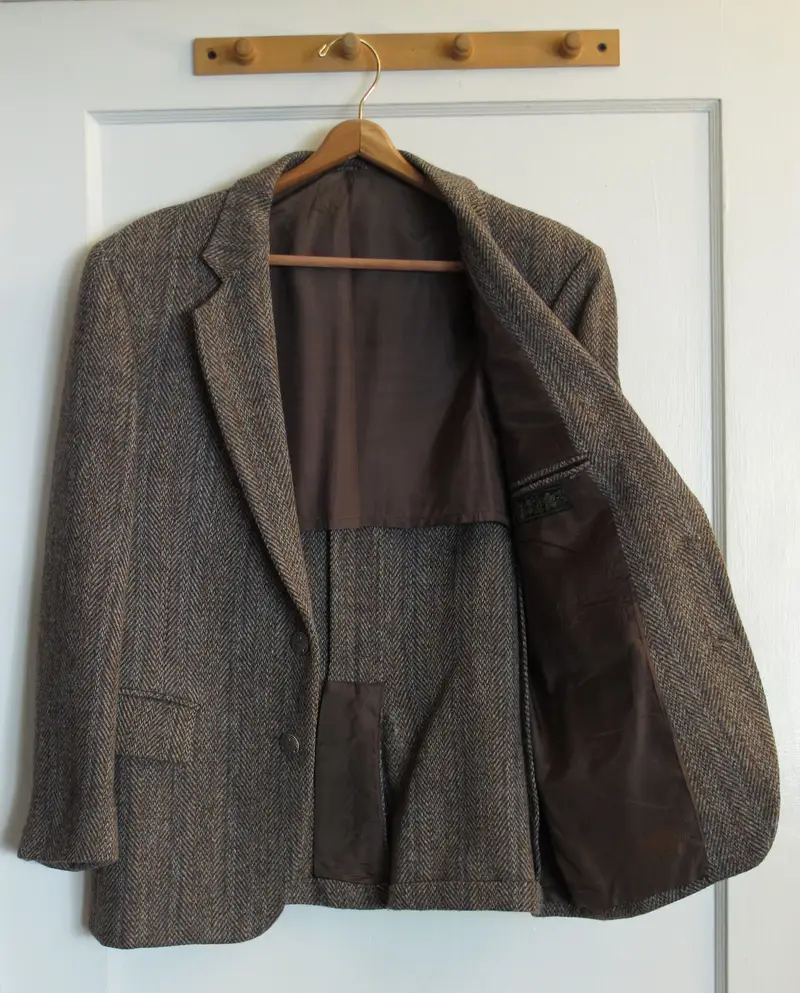
Photo: PKM, CC BY-SA 3.0, source on Wikimedia Commons.

Open it out. A lining is replaceable but not cheap, so it should affect what you are willing to pay. Underarm splits and rot in the armholes are the usual trouble, and a strong smell of old sweat in this area is hard to shift. Look at the inner pockets, too, and see whether the stitching is holding.
A musty smell may air out in a week or two outdoors in the shade. Smoke, which clings on, is harder. If you are buying in person, smell it. If you are buying online, ask.
5. Buttons and small hardware
Buttons are the easiest repair on this list, and a good set of leather or horn replacements can lift a plain jacket. Do check whether all the sleeve buttons are present, as an exact match for one missing button can be hard to find. If you plan to replace them all anyway, this is not much of a concern.
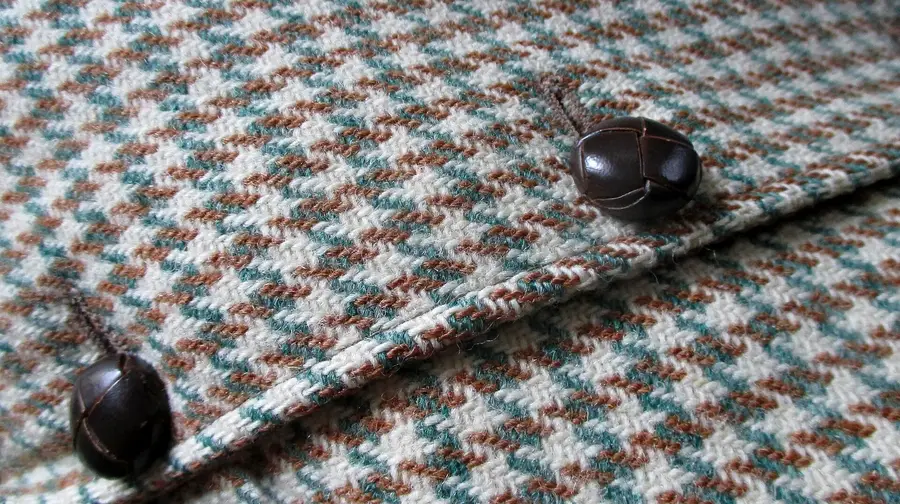
Photo: Lupus in Saxonia, CC BY-SA 4.0, source on Wikimedia Commons.

6. The labels
Look for a fibre label. Business Companion, a trading standards guidance site, says second-hand clothing must comply with textile labelling rules, but that clothes made long ago, such as before the Second World War, are unlikely to carry detailed labels and sellers are unlikely to be expected to provide that level of detail. A jacket without one is therefore not automatically suspect. It just means you are taking the cloth on trust.
On labels that do exist, the word "pure" should be used only where the garment is a single fibre, and where a jacket has a lining with a different fibre content, each should be shown. If a label reads "wool and polyester", then you have useful information about how the cloth will behave and whether "all-wool tweed" in the listing is accurate.
For anything sold as Harris Tweed, the check is the Orb on the label. The Harris Tweed Authority is clear that it cannot give provenance for individual garments, so a story from the seller is only a story. If you are unsure what the pattern actually is, our note on tweed and herringbone should help.
Buying online
You cannot hold it up to the window, so make the seller do it for you. Ask for the following, and treat a refusal as information.
- Flat measurements, as above
- Close photos of the underarms, the collar and each elbow
- A photo of any labels, including the fibre and care labels
- A direct answer on any moth damage, repairs, smoke or pets
What the law gives you
This is general information and not legal advice. Your position depends on who is selling. According to Which?, buying from a retailer or a trader on a marketplace gives you broadly the same rights as buying from any other online store, although you may have to deal with the seller directly. A private seller is a different matter: the goods must be as described, but the seller does not have to disclose faults. Marketplaces may offer extra protection of their own, so check the terms before paying, and keep a screenshot of the listing. Shops' own returns policies vary too, so ask before you buy. If a dispute becomes serious, Citizens Advice can tell you where you stand.
When you get it home
Do not hang it in the wardrobe yet. Which? notes that infestations often arrive with second-hand and vintage textiles, so give it the two-week freezer treatment: sealed in a bag at -18°C, as English Heritage recommends. Thaw it in the bag. Then brush it down with a clothes brush, air it, and only then put it with your other clothes. A trip to the tailor comes after that, once you have worn it around the house and know what you want changed.