
Harris Tweed is unusual among cloths because its name has a legal definition. Section 7 of the Harris Tweed Act 1993 defines it as tweed handwoven by islanders at their homes in the Outer Hebrides and finished there, made from pure virgin wool that has been dyed and spun in the Outer Hebrides. That wording is the reason a simple check works. A body exists to police the name, and it has a mark you can look for.
The body is the Harris Tweed Authority. Its own guidance is direct: only tweed bearing the Orb can be considered genuine. The Orb is a registered certification mark rather than a piece of branding, and the Authority supplies the artwork only to people it is satisfied will follow its rules.
Where the Orb goes, and when
There are two moments to know about, and they are easy to run together.
The first happens to the cloth. According to the Authority's account of the process, woven lengths go back to the mill in their greasy state, where darners correct flaws and the tweed is washed, beaten, dried, steamed, pressed and cropped. An independent inspector from the Authority then checks the finished cloth against the standard. If it passes, the Orb is ironed onto the reverse. The Authority says the cloth can only be called Harris Tweed from that point on.
The second happens to the garment. A Harris Tweed label is applied after the jacket, coat or bag has been made, by whoever made it. So on a finished, lined jacket you will usually be looking at a sewn-in label and not at the stamp, because the reverse of the cloth is hidden from you.
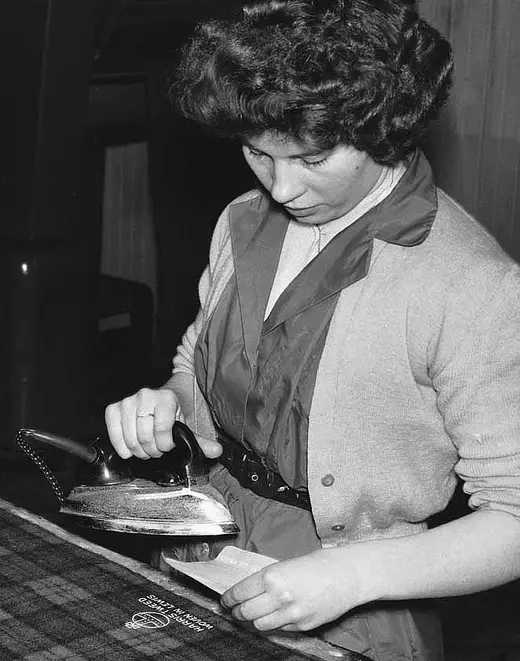
Photo: The Harris Tweed Authority, CC BY-SA 3.0, source on Wikimedia Commons.

Checking a label in a shop or a listing
- Find the Orb. You are looking for the words Harris Tweed together with the Orb mark. The words alone are not enough.
- Read the rest of the label. The Orb speaks for the cloth. It tells you nothing about who cut the garment.
- Ask where the cloth is used. A bag or a pair of slippers may have only a panel of Harris Tweed, with the rest in leather or something else. Check that the part you care about is the part with the provenance.
- Online, ask for a clear photo of the label. A seller who has the item in hand can take one in a minute. See our checklist for buying a second-hand tweed jacket for the other photos worth asking for.
The number on the label. Older jackets may carry a serial number, and people often hope it will date the garment. The Authority says it was once an internal tracking device for the industry, and that it cannot supply historic details about individual garments. Your best lead is the maker or the original retailer.
Words that prove very little
Sales copy tends to lean on the romance of the cloth. Here is how we would read the common phrases. None of these is proof that something is fake. They simply do not do the work the Orb does.
| What you are told | What it establishes |
|---|---|
| "Tweed" | A type of cloth. See what the word covers. The Act protects the name Harris Tweed, and its definition says nothing about tweed in general. |
| "Scottish" or "made in Scotland" | A country. The Act's definition is narrower: the Outer Hebrides. |
| "Hand woven" | A method, if true. Harris Tweed needs the method and the place, the wool and the finishing. |
| "Harris-style" or "Hebridean-look" | That somebody wants you to think of Harris Tweed. |
| "Vintage Harris Tweed, label removed" | Nothing you can check. The Authority's test depends on the Orb. |
Can you tell by the feel?
Not reliably. The cloth is often described as hairy and springy, and much of it is, but plenty of tweed from elsewhere feels the same, and Harris Tweed itself comes in many weights and designs. The smell of a peat fire that people mention in older pieces is a nice story and no kind of test.
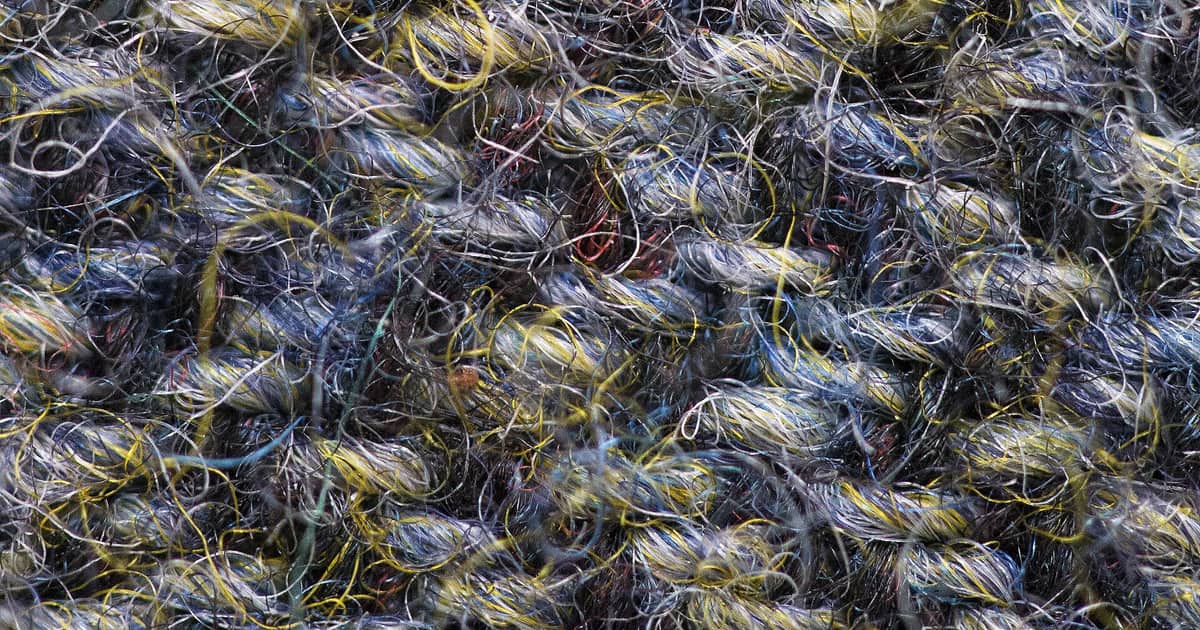
What you can read from the cloth is how it was made in general terms. Because wool is dyed before spinning and blended to a recipe, close up a Harris Tweed yarn is often a mix of colours, as in the photograph at the top of this page. That is a feature of many good tweeds, so it is worth enjoying but not worth relying on.
Harris Tweed from islands other than Harris
This confuses people, sometimes because a label or a seller mentions Lewis. It is not a warning sign. The Authority notes that cloth from Lewis, the Uists and Barra can also be Harris Tweed, because the same weaving methods were used across those islands. The Act's definition speaks of the Outer Hebrides, not the single island.
The wool itself may have started somewhere else as well. The Authority says it is gathered mostly from the Scottish mainland, with island flocks sheared in early summer. The dyeing and spinning are what the law ties to the islands. So "the sheep were not from Harris" is no argument against a piece.
If you still have doubts
Suppose the label looks wrong, or the seller gets vague when asked. You have a few sensible moves.
- For a new item, ask the retailer to confirm in writing that the cloth is Harris Tweed. Keep the listing as well. Goods from a trader have to match their description.
- Contact the maker named on the label. The Authority points people to the maker or the retailer for questions about a particular garment's age or origin.
- Tell the Authority if you think the name or mark is being misused. It holds the rights in both and says it enforces its rules. Do not expect it to settle a dispute over a purchase, though. It says it cannot resolve complaints about faulty products, and that faults often lie in parts that are not the cloth, such as zips or leather.
- Buying cloth by the metre is simpler. The Authority sells nothing itself, but it lists mills and independent producers you can buy from directly.
Once it is yours
Genuine or not, a wool jacket has the same enemies. If it has been stored for a while, or came from someone else's wardrobe, read our guide to clothes moths before hanging it next to anything you value. The Authority describes its cloth as easy to clean and repairable with simple tools, which is one reason a good jacket can outlast its first owner.