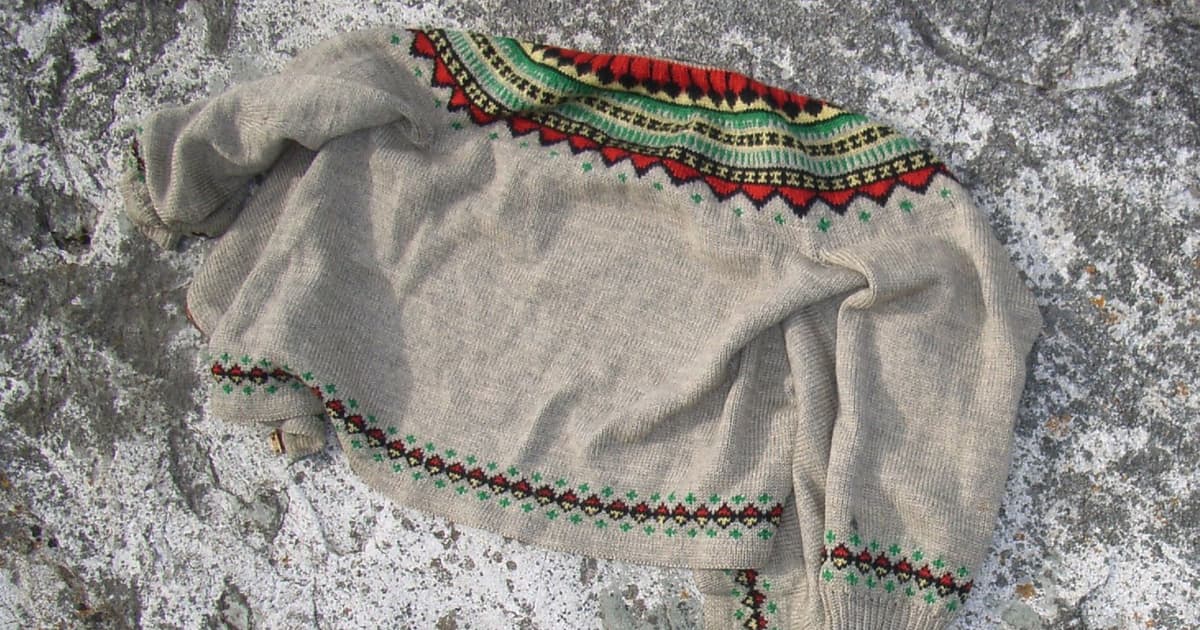

Wool has a reputation for being difficult that it mostly does not deserve. It needs washing less often than cotton, and a jumper that has only been worn for a few hours can often just be aired overnight and put away. When it does need a wash, the job takes a few minutes of attention plus a day or so of drying.
Why wool shrinks in the first place
It helps to know what you are avoiding. The surface of a wool fibre is covered in tiny scales. Heat, moisture and motion open those scales, and agitation makes them latch onto each other. Once they have locked together, the fabric becomes denser and smaller. That is how felt is made on purpose, so a jumper that comes out of the wrong cycle stiff and child-sized has effectively been made into felt by accident.
Water alone is not really the enemy. A jumper sitting still in lukewarm water is at little risk. Rubbing, wringing and spinning hard in hot water are where things go wrong.
Start with the label
The care label decides which of these paths you take.
If the label has gone, as it may on an older or second-hand piece, treat it as hand wash only and go gently.
Washing by hand
These steps follow Woolmark's guidance, with some practical notes of our own.
- Fill a clean basin or bath with lukewarm water. It should feel neither warm nor cold on your wrist.
- Add a wool detergent and swish it through before the jumper goes in. Woolmark suggests choosing one it has approved. Whatever you pick, use only as much as the bottle says, since extra soap means extra rinsing.
- Turn the jumper inside out, lower it in and press it under. Leave it for ten minutes. Resist the urge to scrub. If there is a marked cuff or collar, press and release it a few times with your fingers.
- Lift it out supported from below. A wet jumper is heavy, and the weight can pull the shape.
- Rinse in lukewarm water, then rinse again in cold water, as Woolmark advises.
- Press out the water by squeezing the jumper gently against the side of the basin. Do not wring or twist it.
- Roll it in a clean towel and press down, which removes a good deal more water than you might expect.
Using a machine
Only if the label allows. Turn the jumper inside out or put it in a laundry bag, add a wool detergent, and choose the wool cycle. If your machine does not have one, Woolmark says to use the cold or delicates cycle. Its page does not give a spin speed, so we leave that to the cycle's own setting and avoid adding anything extra.
If you own only one precious jumper, it may be that the label's permission is one you do not take up. Nothing about hand washing is harder, and you stay in control of how much it moves around.
Drying is where most of the damage happens
Woolmark's drying advice comes down to one instruction: dry knitwear flat. Lay the jumper on a pale, lint-free towel, shape it with your hands and smooth out the creases. A mesh drying rack that sits over the bath speeds things up.
Three things to avoid, with the reasons:
- The radiator. The folded part dries fastest and may change colour or be damaged, says Woolmark.
- A hanger. The weight of the water can stretch the jumper lengthwise and leave humps on the shoulders. Wire hangers are the worst for this.
- Sun. Keep it out of direct and magnified sunlight, such as a bright window.
Tumble drying is for items whose care label specifically says so, on low heat or the wool setting. If in doubt, flat is always the safe answer.
When something has already gone wrong
Humped shoulders or a stretched neck
Often fixable. Woolmark suggests dipping the misshapen part in warm water at 30 to 40°C and gently massaging it with your hands, then letting it dry flat. It usually comes back.
Stiff, smaller and dense
That is felting, and we would rather be honest: Woolmark says a badly felted hand-wash or dry-clean item that has been machine washed cannot be recovered. You will see advice online about stretching with hair conditioner. It may buy you a little size on a mildly shrunken piece, but it will not unlock what has already felted. Felted wool does make good patches and slippers, so the jumper need not be wasted.
Bobbles
Pilling is what happens when loose fibres tangle on the surface, and it is not a sign of a bad wash. A fabric comb or an electric shaver will take care of it. Work gently and lay the garment flat as you go.
New holes after a wash
The wash probably did not cause them, though it may have revealed them. Small round holes usually mean something has been eating the wool. Read about clothes moths, treat the jumper, and then darn the hole.
Before you put it away
Make sure it is fully dry, particularly at the underarm and the collar. Fold it, as hanging stretches knitwear over time. If it is going away for the summer, wash it first. The National Trust's advice on pests is that moths rarely eat clean wool, and sealed storage adds a second barrier. Tweed jackets are a different animal: their linings and canvas interiors make home washing a poor idea, so stick to brushing and airing unless the label says otherwise.